Vuqelari
Frame Module
Frame Module
Couldn't load pickup availability
- Problem Statement
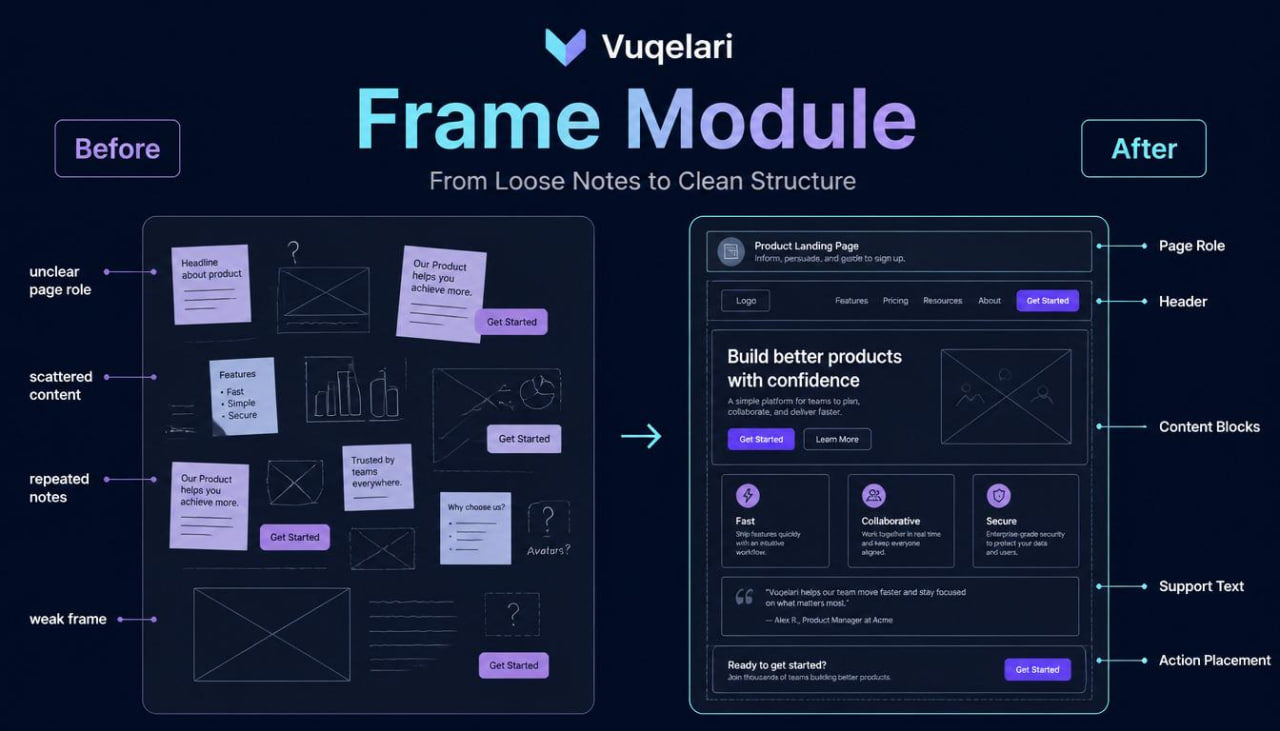
Many learners begin interface study by focusing on colors, visuals, or decorative details before the page structure is fully planned. This can make a screen feel unfinished even when it looks visually neat, because the information may not be framed in a useful order. A layout needs more than attractive sections; it needs a reason for each block, a visible path for reading, and a practical connection between content and action. Learners may also struggle to decide what belongs on a screen and what should be removed or moved elsewhere. Frame Module was created to help learners study UI/UX design through page framing, content placement, and thoughtful screen planning.
- Solution
Frame Module gives learners a structured way to plan interface screens before moving into detailed visual work. The course explains how to define a page role, frame information into sections, arrange content blocks, and guide attention through layout decisions. Each module connects a design idea with a practical study task, so learners can read, review, and apply the topic to simple interface examples. The materials focus on structure first: what the screen needs to say, how it should be divided, and where the main action belongs. This tier helps learners build a more organized approach to UI/UX study through page framing and layout reasoning.
- What’s Inside
Frame Module includes a detailed set of UI/UX design materials centered on page structure, content framing, and interface planning. The course begins with a module about page role. This section explains that every screen should have a defined reason within a user journey. A screen might introduce a topic, collect information, present choices, display details, show progress, or guide a next step. Learners study how the role of a screen affects the amount of content, the order of sections, and the placement of actions.
The second module focuses on framing content. Learners explore how information can be shaped into smaller blocks instead of being placed on a page as one long group. This section covers headings, support text, item groups, form areas, comparison rows, notes, and closing sections. Each content block is explained as a piece of the larger screen story. Learners study how a heading can set direction, how support text can add context, and how grouped details can make the page easier to review.
The next module introduces section logic. This part explains how page sections should follow a readable order. Learners review examples where the introduction appears first, supporting details come after, and the main action appears in a natural place. The course also shows less organized examples where actions appear too early, supporting details are scattered, or repeated information makes the page feel heavy. This helps learners notice the difference between a page that simply contains information and a page that guides the user through information.
Frame Module also includes a module about layout framing. Learners study how margins, spacing, columns, cards, and rows can shape the way information is understood. The materials explain that layout framing is not only visual arrangement. It also creates relationships between elements. Items placed close together may feel connected. Items separated by space may feel like different topics. Learners practice identifying when elements belong together and when they need separation.
A separate module focuses on action placement. This section studies where buttons, text links, choice areas, and form actions can appear inside a screen. Learners review examples where the main action follows the main explanation, where secondary actions are placed with less visual weight, and where repeated actions may create confusion. The goal is to help learners understand that action placement should follow the reading path rather than interrupt it.
The course also includes a module about content priority. Learners study how to decide which information should appear first, which details can support the main message, and which items may belong in a later section. This module includes a sorting exercise where learners arrange content notes into primary, supporting, and optional groups. This practice helps learners think about interface structure before sketching the screen.
Frame Module includes practical wireframe exercises. One exercise asks learners to plan a simple information page using defined content blocks. Another exercise asks them to frame a form screen with labels, input areas, support notes, and an action section. A third exercise asks learners to review a sample page and mark which parts feel grouped, misplaced, repeated, or unclear.
The tier includes several checklists for study and review. The page role checklist asks whether the screen has a clear purpose, whether each section supports that purpose, and whether the main action fits the page role. The content framing checklist asks whether related ideas are grouped, whether headings introduce each section well, and whether support text is placed close to the content it explains. The layout framing checklist asks whether spacing supports reading order, whether page areas feel balanced, and whether actions appear in a useful position.
A glossary section is included with terms such as page role, content block, section logic, layout frame, priority, action placement, support text, form area, grouped content, and screen outline. Each term is explained in simple UI/UX language and connected to a practical example.
The recap section gathers the main ideas into one planning method: define the page role, sort the content, frame information into blocks, place sections in a readable order, add actions where they fit the path, and review the screen before adding visual detail.
- Who Is This For?
Frame Module is for learners who want to study UI/UX design through planning and structure. It is suitable for people who understand basic interface ideas but want a more careful method for shaping pages before visual styling.
This tier may fit learners who often ask questions such as: What should appear on this screen? Which section should come first? Where should the main action go? How can content be divided into clearer blocks? The course gives learners a practical way to answer these questions through study materials, examples, and review tasks.
Frame Module is also useful for learners who prefer self-paced study. The materials do not depend on named software, operating systems, or platform names. The course stays focused on UI/UX thinking, page planning, and interface structure.
- What You’ll Learn
- How to define the role of a screen within a user journey
- How page role affects content order and action placement
- How to divide information into useful content blocks
- How headings and support text shape reading direction
- How section order affects the way a screen is understood
- How to identify scattered, repeated, or misplaced content
- How spacing can show relationships between interface elements
- How rows, cards, columns, and sections frame information
- How to sort content into primary, supporting, and optional groups
- How to place actions in a way that follows the reading path
- How to separate main actions from secondary actions
- How to create a simple screen outline before visual styling
- How to plan form screens with labels, fields, notes, and actions
- How to review a wireframe using practical questions
- How to connect page purpose, content structure, and user movement
- How to describe interface planning decisions in plain language
- 30-Day Refund Note
Vuqelari includes a 30-day refund window for orders that match the store policy conditions. Learners should review the course materials during this period and contact the support team if the tier does not match their study needs. Refund requests are handled through the store’s regular support process and may depend on order details, delivery status, and the policy information shown on the store page.
Self-paced learning overview
- 🗂️ Digital file available after purchase
- 📚 Long-term availability
- 🔒 Secure checkout
- 🗓️ Content updated in 2026
What format are the Vuqelari course materials provided in?
What format are the Vuqelari course materials provided in?
The Vuqelari course materials are prepared as digital learning resources for self-paced study. They include written modules, visual examples, practice tasks, checklists, and review sections.
Who are the courses made for?
Who are the courses made for?
The courses are made for learners who want to study UI/UX design through organized materials and practical exercises. Each tier has its own depth, from an introductory starting point to wider topic collections.
How do I study after placing an order?
How do I study after placing an order?
After placing an order, you receive the course materials through the store’s normal delivery process. You can study the modules at your own rhythm, return to earlier sections, and use the tasks for review.
Share